
By Ron, Founder of Tactical Fitness Austin
Last updated: June 2026
TL;DR
Anyone can be taught to shoot. Almost no one is taught to decide. The hardest part of a defensive encounter is the half-second before: the decision to shoot, or not. Here’s the skill nobody trains.
Anyone can be taught to shoot.
Almost no one is taught to decide.
The hardest part of a defensive encounter isn’t pressing the trigger. It’s the half-second before: the decision to shoot, or not.
Every round you fire is a decision you are legally and morally responsible for. But almost all firearms training stops at the mechanical: aim, press, repeat. The thing that actually keeps you alive and out of a courtroom, judgment under stress, gets no reps at all.
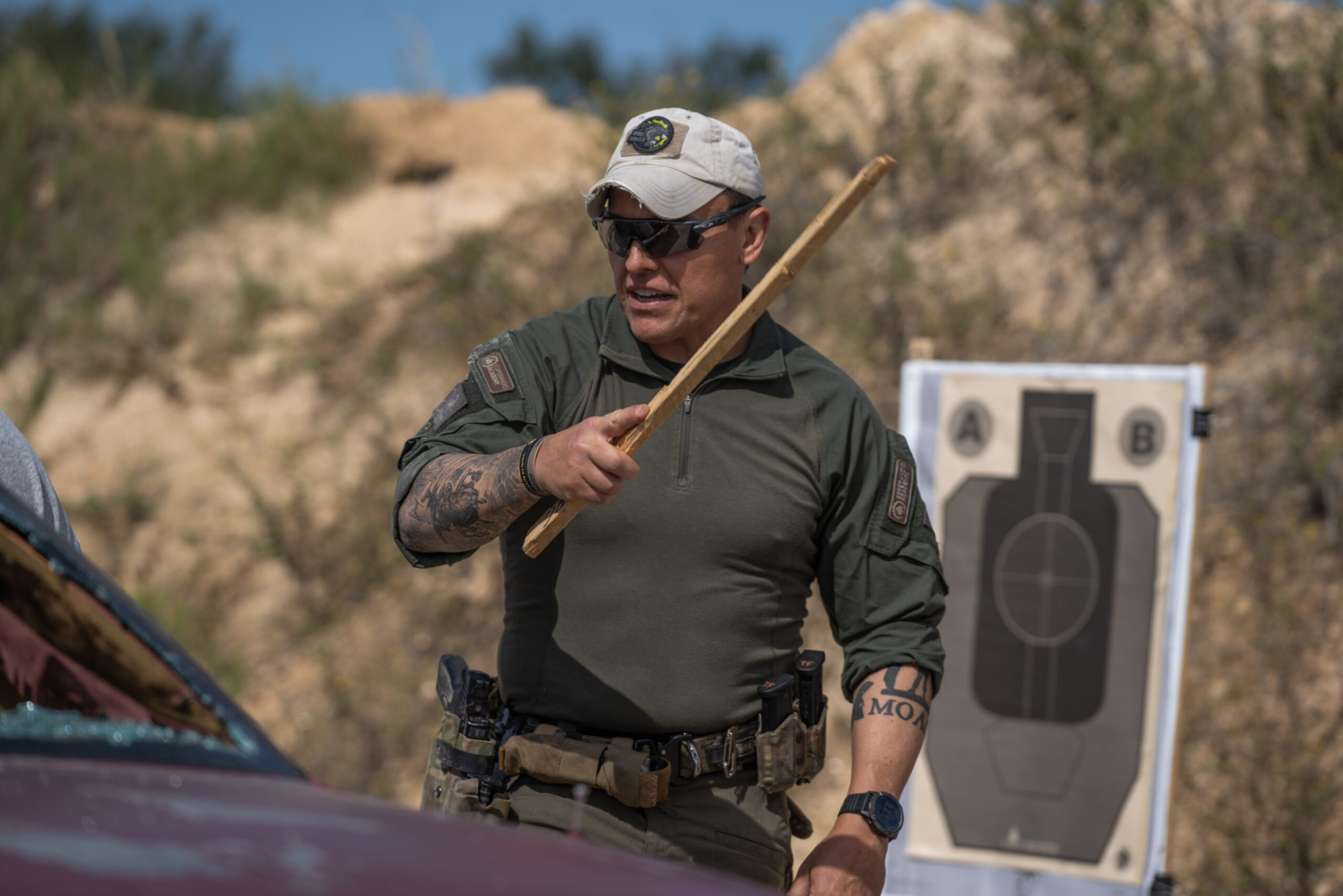
Why decision-making is the real skill
A static target never makes you choose. It’s always a threat, always a go. Real life isn’t. Real life is ambiguous, fast, and full of reasons not to shoot. If the first time you ever practice that decision is for real, you’re gambling with the rest of your life.
- Every shot is a decision you own, legally and morally
- Targets that don’t think can’t build judgment
- Stress collapses your ability to process information
- Hesitation and over-reaction are both trained out, not wished away
What decision-making under stress actually requires
1. Reading the situation. Distance, intent, hands, environment. Processing all of it while your heart rate is spiking.
2. The shoot / no-shoot threshold. Knowing, before it happens, what does and doesn’t justify a round. Rehearsed, not improvised in the moment.
3. Managing the freeze. The brain’s default under surprise is to lock up. Reps replace the freeze with a response.
4. Knowing when to stop. Recognizing the threat is over and the shooting ends. As important as knowing when to start.
This is why force-on-force exists. You cannot learn judgment from paper. You learn it from scenarios that talk back, change, and force you to choose under pressure, with consequences.
Why almost no one trains this
- It requires a facility, role-players, and protocols most ranges don’t have
- It’s uncomfortable. It exposes how you actually react, not how you imagine you would
- It can’t be done alone or on a square range
- It’s “advanced,” so it gets postponed forever
Combat Club is where this gets trained.
Interactive, scenario-based work with other members and ex-special-forces instructors, putting you in situations that demand a decision, then showing you what you actually did versus what you thought you’d do. That gap is where people get hurt. We close it before it counts.
The marksmanship is the easy part. The decision is the skill. Train the part that actually decides how it ends.
Train hard,
Ron
Founder, Tactical Fitness Austin
P.S. Ask yourself honestly: have you ever once practiced NOT shooting? If every rep you’ve ever taken ended in a trigger press, you’ve trained yourself to do exactly one thing. A real encounter demands more options than that.
See if you qualify for Combat Club →
Frequently asked questions
What is shoot/no-shoot training?
It's training the decision to shoot, or not, under stress, not just the mechanics of shooting. Every round you fire is a legal and moral decision you own. Shoot/no-shoot training uses scenario-based, force-on-force drills to build judgment, because a static target never makes you choose.
Why isn't range shooting enough for self-defense?
A paper target is always a threat and always a go. Real encounters are ambiguous, fast, and full of reasons not to shoot. If the first time you practice that decision is for real, you're gambling with the rest of your life. Judgment is a separate skill from marksmanship.
How do you train decision-making under stress?
Through force-on-force scenarios that talk back, change, and force you to choose with consequences: reading the situation, knowing your shoot/no-shoot threshold in advance, managing the freeze response, and knowing when to stop. You can't learn it from paper; it requires role-players and protocols, which is what Combat Club provides.