
By Ron, Founder of Tactical Fitness Austin
Last updated: June 2026
TL;DR
The 50 vs 100 yard zero debate gets argued like religion. The honest answer depends on what the rifle is for. Here’s how to choose, and why most people overthink it.
AR zero debates are endless.
50/200. 100 yard. 36/300. 25 yard.
Everyone has strong opinions. Most are based on military doctrine that doesn’t apply to civilian defensive use.
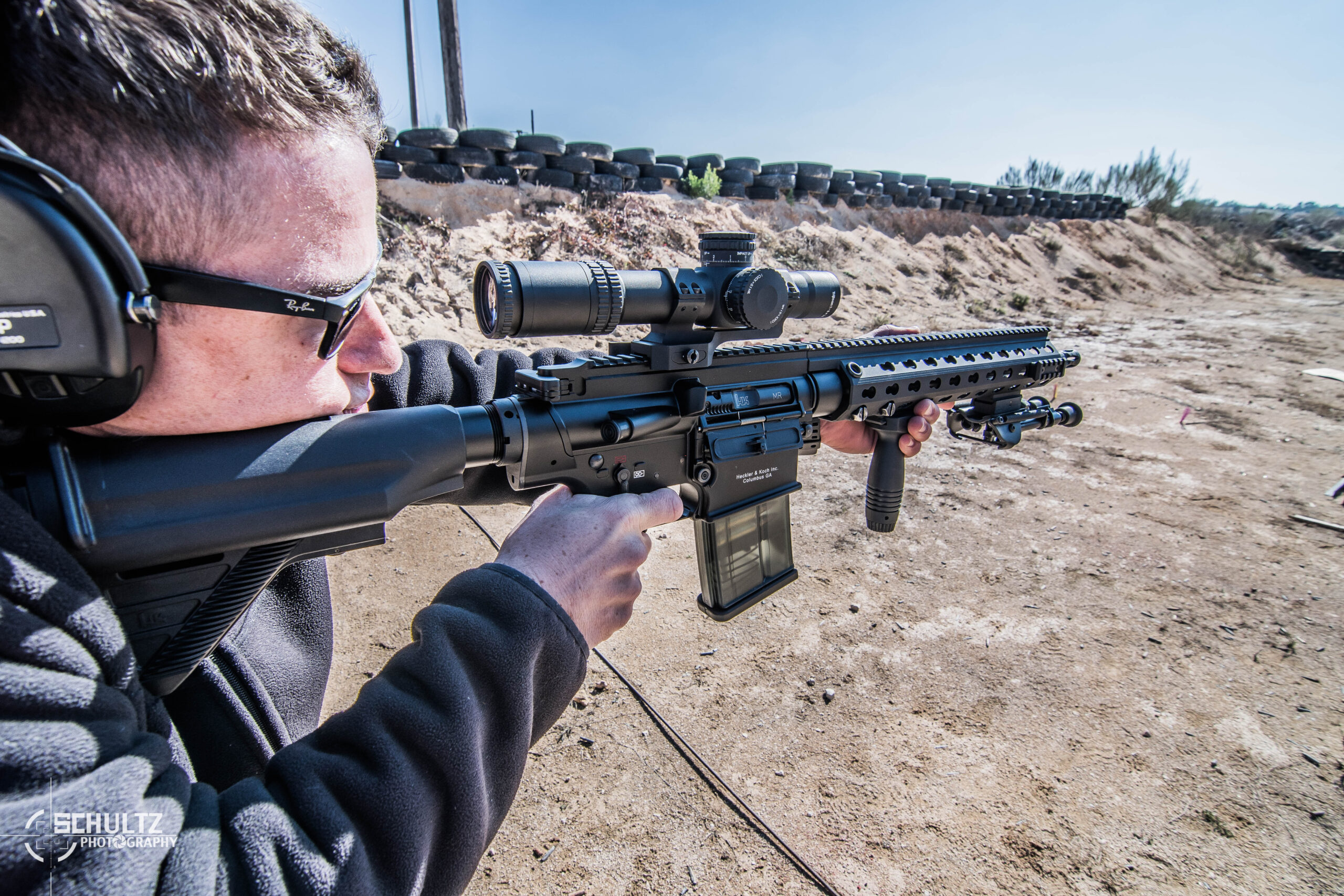
Here’s what actually matters
Your zero should be chosen based on:
1. Your most likely engagement distance
2. Your acceptable point-of-aim/point-of-impact variance
3. The ammunition you actually use
4. Your optic type
The main zero options
50/200 yard zero:
– Dead-on at 50 yards
– Approximately dead-on at 200 yards
– Works well for most civilian defensive scenarios
– Good balance of close and distance capability
100 yard zero: (my go to!)
– Dead-on at 100 yards
– 1-2 inches low at close range
– Precision shooters often prefer this
36 yard zero (nice in theory but never seems to work out for my students)
– Secondary zero crossing around 300 yards
– Significant impact variance at various distances
– Rarely optimal for civilian use
Here’s the reality for most civilians
Your likely engagement distance is 5-50 yards. Home defense, self-defense, etc.
At those distances, any reasonable zero works. The difference between a 50-yard and 100-yard zero at 10 yards not discernable. Practically irrelevant in defensive use.
What matters more than your zero
Knowing your actual point of impact at various distances
Most shooters zero at one distance and never test other distances. Then they’re surprised when their 100-yard zero hits 1 inche low at 50 yards.
Understanding sight offset
Your sight sits 2.5 inches above your bore (varies with mounts). At 5 yards, your bullet hits 2.5 inches below your point of aim. Close range headshots require holding over, not dead-on.
Consistent zeroing process
Sloppy zero = inconsistent performance. Follow a disciplined process: groups, adjust, confirm.
Ammunition consistency
Zeroed with one load, running another? Your zero is approximate at best. Defensive ammo and training ammo should be similar profile.
Practical recommendation for most civilian shooters:
100 yard zero. Works for defensive distances. Adequate for 200+ yard shots with minimal holdover. Easy to confirm.
Combined with understanding sight offset holdover at close range, approximate holds for various distances, and your specific ammo performance.
The zero is just one piece. Understanding ballistics is the full picture.
Train hard,
Ron,
Founder, Tactical Fitness Austin
P.S. – Test your zero at 5, 10, 25, 50, and 100 yards. Know your rifle’s actual behavior at distances, not just theoretical.
Start Training (https://tacticalfitnessaustin.com/training/combat-club/)
https://instagram.com/tacticalfitnessaustin
Book a private lesson at Tactical Fitness Austin →
Frequently asked questions
Should I zero my rifle at 50 or 100 yards?
It depends on what the rifle is for. A 50-yard zero is forgiving for general and defensive use at typical distances; a 100-yard zero is simpler to understand and good for longer, more precise shooting. Both are valid, and most people overthink it.
What does zero distance actually mean?
Your zero is the distance at which your sights and the bullet's path line up, so point of aim equals point of impact. Because the bullet arcs, that line-up only happens at specific distances, which is why the zero you choose changes your holds at every other range.
Does zero distance matter for defensive shooting?
Within typical defensive distances the practical difference between common zeros is small. Understanding your zero and your holdovers matters more than which one you pick. The bigger gains come from a solid positional foundation and knowing your trajectory, which we cover in rifle training at Tactical Fitness Austin.