
By Ron, Founder of Tactical Fitness Austin
Last updated: June 2026
TL;DR
Most violent encounters happen in low light. Almost none of your training does. Here’s why low-light is its own skill: target ID, light management, shooting with degraded vision, and why nobody practices it.
Look at when you train.
Daylight. Square range. Clear targets. Plenty of time.
Now look at when violent encounters actually happen. Most of them are in low light, and almost none of your training is.
This is one of the biggest mismatches in how people prepare. The pattern has been consistent for decades: a large share of defensive gun uses happen at night or in dim light, in the worst possible conditions to see, identify, and shoot. And the overwhelming majority of shooters have never fired a round outside of perfect daylight.
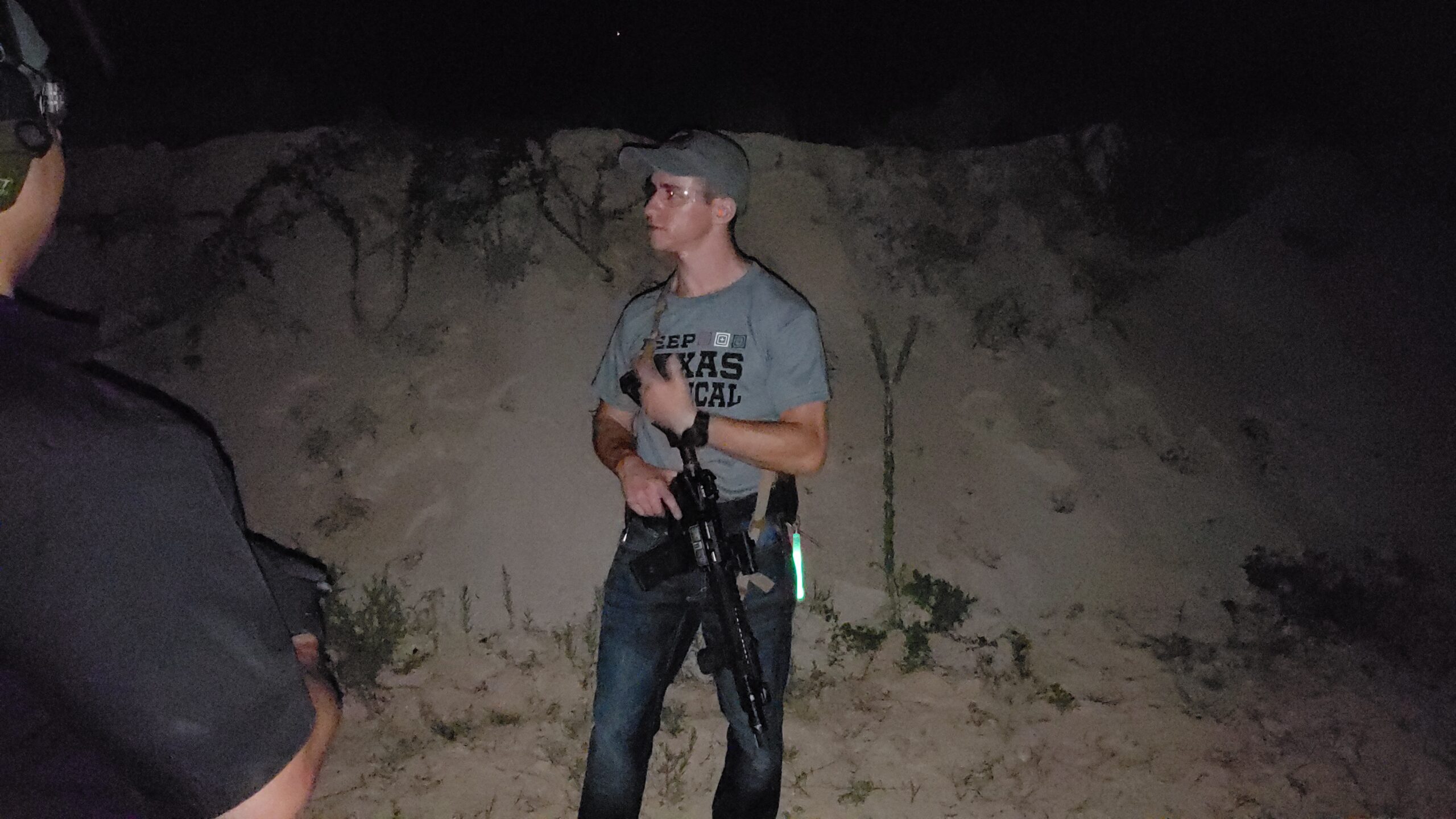
Why low-light is its own skill
In the dark, everything you trust gets harder. You can’t see your sights. You can’t confirm your target. You have to run a light while you run the gun. Skills that feel automatic in daylight fall apart when you take the light away, unless you’ve trained without it.
- You can’t legally or morally shoot what you can’t identify
- Iron sights and even red dots behave differently in the dark
- A handheld or weapon light is a skill, not just an accessory
- Light discipline, when to turn it on and when not to, can save your life
What low-light training actually builds
1. Target identification. Confirming a threat is a threat before you press. The most important and most ignored low-light skill there is.
2. Light management. Handheld and weapon-mounted techniques, using light in bursts instead of painting yourself as a target.
3. Shooting with degraded vision. Finding the gun, indexing the target, and making the shot when you can’t see your sights clearly.
4. Movement and cover in the dark. Everything from the movement and drawstroke work, now with the lights off.
None of this is intuitive. All of it is trainable. But only if you actually train when it’s dark, which virtually no range allows or schedules.
Why almost no one does it
- Indoor ranges control the lighting and won’t kill it for you
- Outdoor ranges usually close before dark
- It requires instruction. Light technique done wrong gets you shot
- It’s inconvenient, so it never happens
This is exactly what our private outdoor range and instructors are built for.
One-on-one, after dark, on a private range with no artificial limits. An ex-special-forces instructor teaching light management, target identification, and shooting in the exact conditions you’re most likely to face. You can’t bolt this on later. It’s a foundational skill that just happens to be the one nobody practices.
If 100% of your training is in daylight and a real encounter probably won’t be, that’s not a small gap. That’s the whole game.
Train hard,
Ron
Founder, Tactical Fitness Austin
P.S. Honest question: have you ever fired your defensive firearm in the dark? Not at an indoor range with the lights on. Actually in the dark, running a light, identifying a target? If the answer is no, you’ve never trained for the conditions you’re statistically most likely to fight in.
Book a private lesson at Tactical Fitness Austin →
Frequently asked questions
Why should you train shooting in low light?
Because most violent encounters happen in low light, and almost no one trains for it. In the dark you can't see your sights, can't confirm your target, and have to manage a light while running the gun, skills that fall apart unless you've trained without the lights on.
What is the most important low-light shooting skill?
Target identification, confirming a threat is actually a threat before you press. You can't legally or morally shoot what you can't identify. After that comes light management, using a handheld or weapon light in bursts rather than painting yourself as a target, and shooting with degraded vision.
Where can you train low-light shooting near Austin?
Most indoor ranges control the lighting and won't kill it, and outdoor ranges close before dark, so almost no one offers it. Tactical Fitness Austin runs low-light training on a private outdoor range after dark, teaching light management and target identification in the conditions you're most likely to face.