
By Ron, Founder of Tactical Fitness Austin
Last updated: June 2026
TL;DR
You practice your shooting. You almost never practice getting the gun out. That’s backwards. In a real defensive encounter, the fight is usually decided before your sights ever come up, in the draw, the two seconds between “threat” and “first round.” It’s the most important skill most shooters never train, because most ranges won’t let them. Here’s the drawstroke broken down, why it matters more than your groups, and how to build it under pressure.
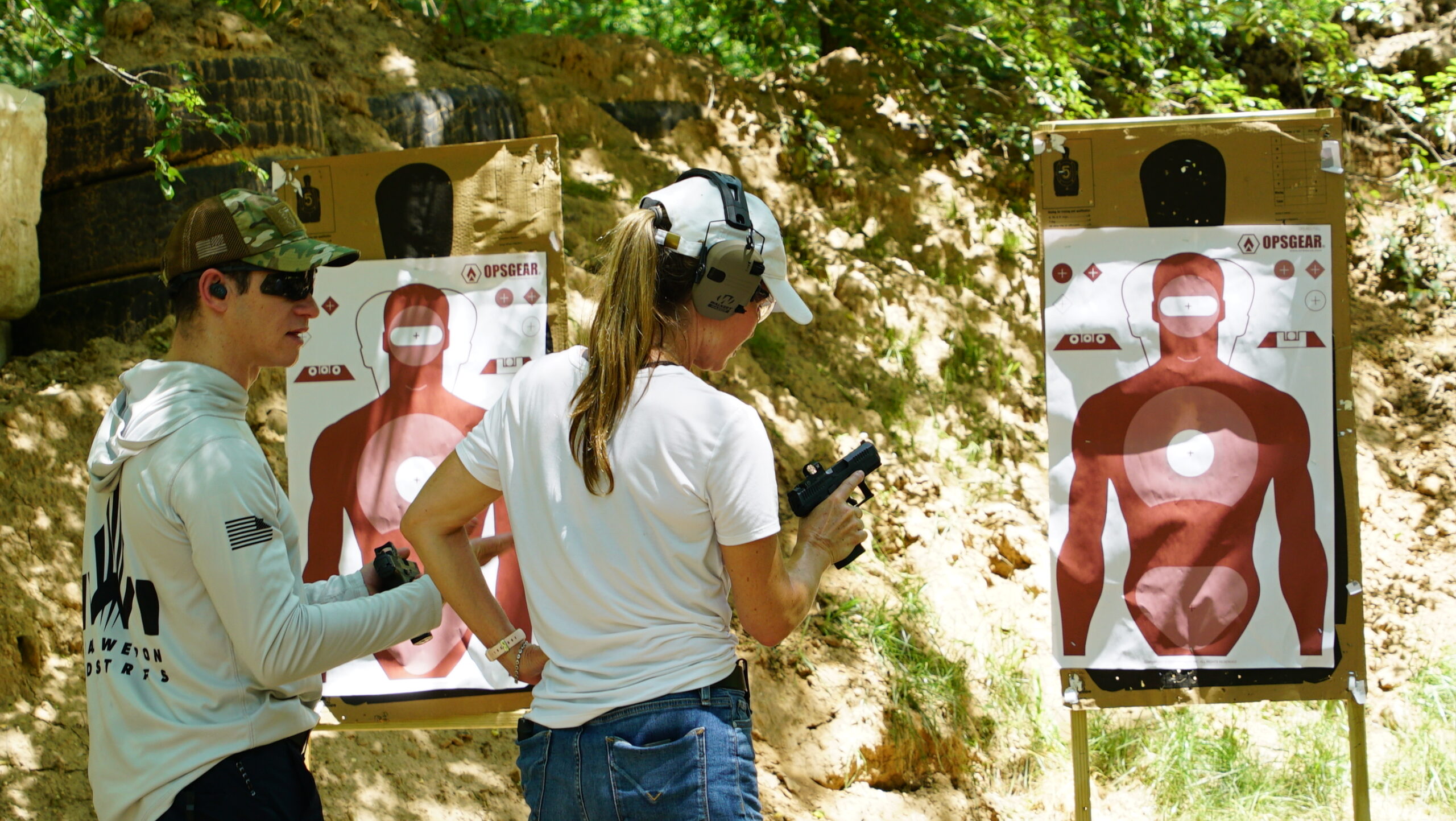
Your draw matters more than your groups
A tight group on a static target tells you one thing: you can shoot when nothing is happening.
Real encounters don’t give you that. They give you a compressed window, a moving threat, and adrenaline. If you can’t get the gun out cleanly and consistently in that window, your marksmanship never gets a chance to matter.
- The threat sets the timeline, not you
- Your first movement is usually wrong if you’ve never drilled it
- A fumbled draw under stress is worse than a slow one
- Speed without consistency is how people get hurt
The drawstroke, broken down
There are four steps. One smooth motion. But each step is a place most shooters quietly fail.
1. Grip establishment. Your firing grip is built in the holster, before the gun moves. Get this wrong and everything downstream is a compromise.
2. Clear and rotate. Clearing the cover garment and rotating the muzzle toward the threat as the gun leaves the holster. Most people telegraph and snag right here.
3. Join and extend. The support hand meets the gun at the centerline, then a straight press to full extension. Not a bowl. Not a scoop. A line.
4. Sights and press. The sights arrive as the gun reaches extension, and the trigger prep happens on the way out, not after.
Why most people never train it
- Most ranges ban drawing from a holster outright (liability)
- Dry practice at home builds bad habits with no one there to correct them
- It exposes how slow and sloppy you actually are, and most people avoid that
- It feels “advanced,” so shooters skip it for years
So people spend thousands of rounds perfecting the one part of the fight they’ll have time for, and zero reps on the part they won’t.
How we fix it at Tactical Fitness Austin
This is exactly what private training fixes. One-on-one, on a private outdoor range where drawing from concealment is the point, not a violation. An ex-special-forces instructor watching every rep, correcting the grip before it becomes a habit, building your drawstroke from the holster up.
You can’t fix your draw on YouTube. You can’t fix it dry-firing alone in the garage. You fix it with reps, under a coach, on a range that actually lets you train it.
If your marksmanship is solid but your draw has never been pressure-tested, that’s the gap worth closing first.
P.S. Time yourself once: concealment, draw, one accurate round at 7 yards. If you don’t know that number, you don’t know your draw. A few private sessions will cut it in half and make it repeatable. That’s the difference between a range hobby and a defensive skill.
Book a private lesson at Tactical Fitness Austin →
Frequently asked questions
What is the drawstroke in defensive shooting?
The drawstroke is the sequence of getting your handgun from the holster to a firing position: grip establishment, clear and rotate, join and extend, then sights and press. It's four steps in one smooth motion, and in a real encounter the fight is often decided in those first two seconds, before your sights ever come up.
Why is the draw more important than marksmanship?
A tight group only proves you can shoot when nothing is happening. Real encounters give you a compressed window, a moving threat, and adrenaline. If you can't get the gun out cleanly and consistently in that window, your marksmanship never gets a chance to matter. The threat sets the timeline, not you.
Can you practice drawing from a holster at a normal range?
Usually no. Most public ranges ban drawing from a holster for liability reasons, and dry practice at home builds bad habits with no one correcting them. Training the draw under pressure requires a facility that allows it and a coach watching each rep, which is what private training at Tactical Fitness Austin provides.