
By Ron, Tactical Fitness Austin Founder Last updated: May 2026
TL;DR
Most corporate offsites fail at the same step — picking activities before defining outcomes. The teams that get real ROI start with one question (“what do we want to be different on Monday?”) and reverse-engineer the day from there. This guide is the framework Samsung, YPO chapters, and Jackson Walker have used to plan the offsites we host — and the practical Austin logistics most planners learn the hard way.
Why corporate offsites in Austin work better than at home
Austin became a serious offsite destination over the past five years for three reasons:
- You can fly the whole team in. Direct flights from every major US city. Hotel inventory at every tier.
- The experience economy is real here. Live music, BBQ, ranches, lake activities, tactical experiences — things that don’t exist as densely anywhere else.
- Teams snap out of work-mode faster in Texas than they do in a hotel ballroom 20 minutes from the office.
The offsites that fail are the ones held in a corporate hotel near the office. The offsites that work are the ones that fully extract the team from familiar surroundings.
Step 1: Define the outcome before picking activities
In 10 years running corporate events, the single biggest mistake decision-makers make is picking activities first. The activities should be the consequence of a decision, not the decision itself.
Start with one of these outcomes:
| Outcome | Typical group | Example trigger |
|---|---|---|
| Reset team trust after a tough year | Established team, 8-25 people | Layoffs, a failed quarter, new leadership |
| Onboard new leadership into a team | Mixed team, 5-40 people | New VP / Director joined, needs to land fast |
| Sales kickoff for the year | Sales org, 20-150 people | Annual kickoff, new comp plan, new pitch |
| Executive offsite for strategy | C-suite + direct reports, 4-12 people | Annual planning, M&A, restructure |
| Recognition / reward for performance | High performers, 5-30 people | Hitting a number, retention play |
| Cross-functional integration | Two teams that need to work better, 10-60 people | Reorg, product-engineering split, etc. |
Each outcome implies different activity priorities, different time allocation, and different success metrics. A sales kickoff and an executive strategy offsite shouldn’t look the same — but most companies cargo-cult one template across both.
Step 2: Pick an anchor experience
Every memorable offsite has one anchor: the thing the team talks about months later. Everything else is supporting.
The anchor needs three properties:
- The team does it together, actively. Watching a band is fun. Doing something together that pushes everyone is unforgettable.
- It can’t be replicated near the office. Austin-specific. Texas-specific. Once-a-year-specific.
- It surfaces something about the team you wouldn’t see in a meeting room. Who steps up. Who hangs back. Who teaches. Who learns fast.
The anchor in good Austin offsites is usually one of:
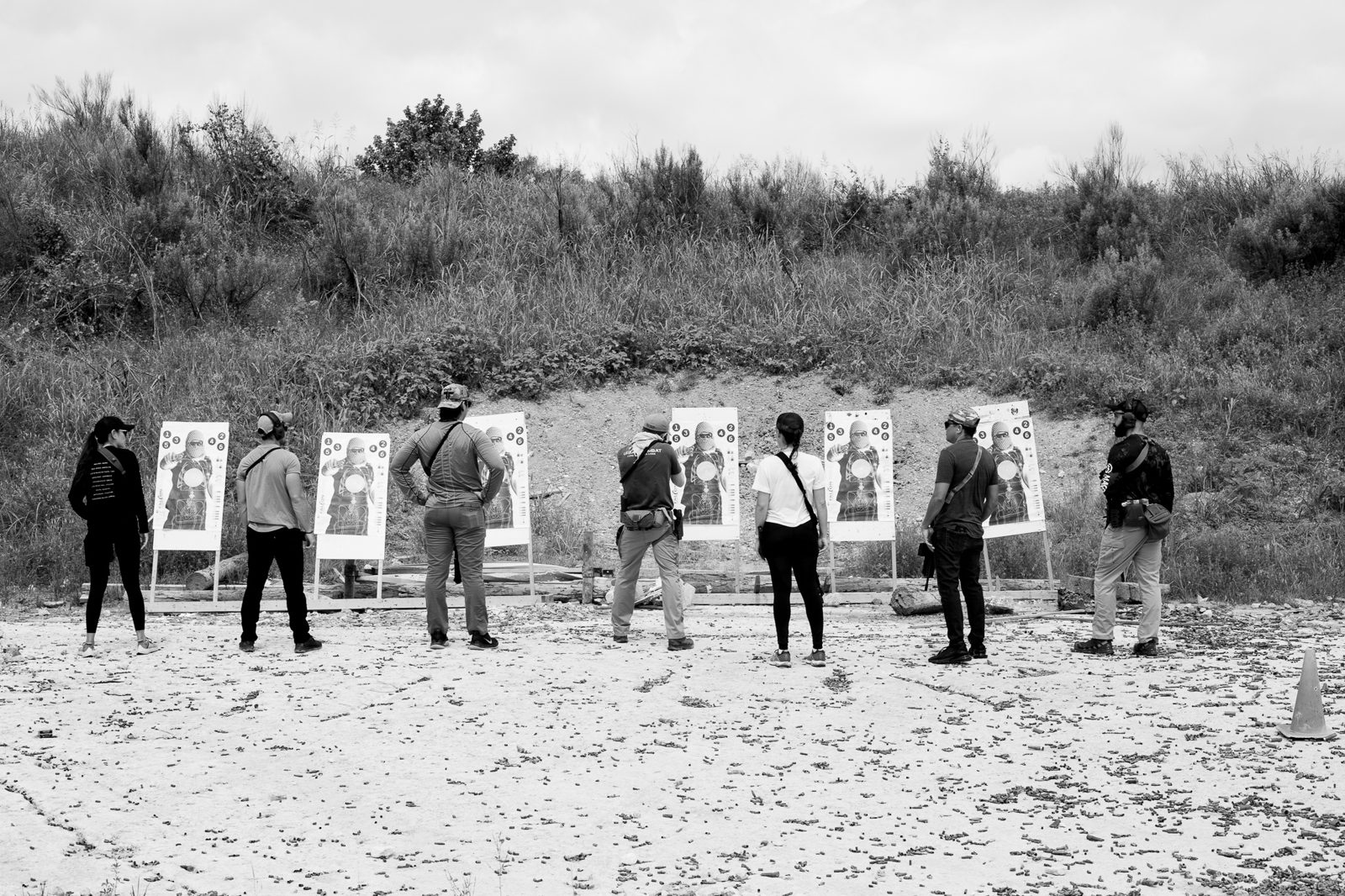
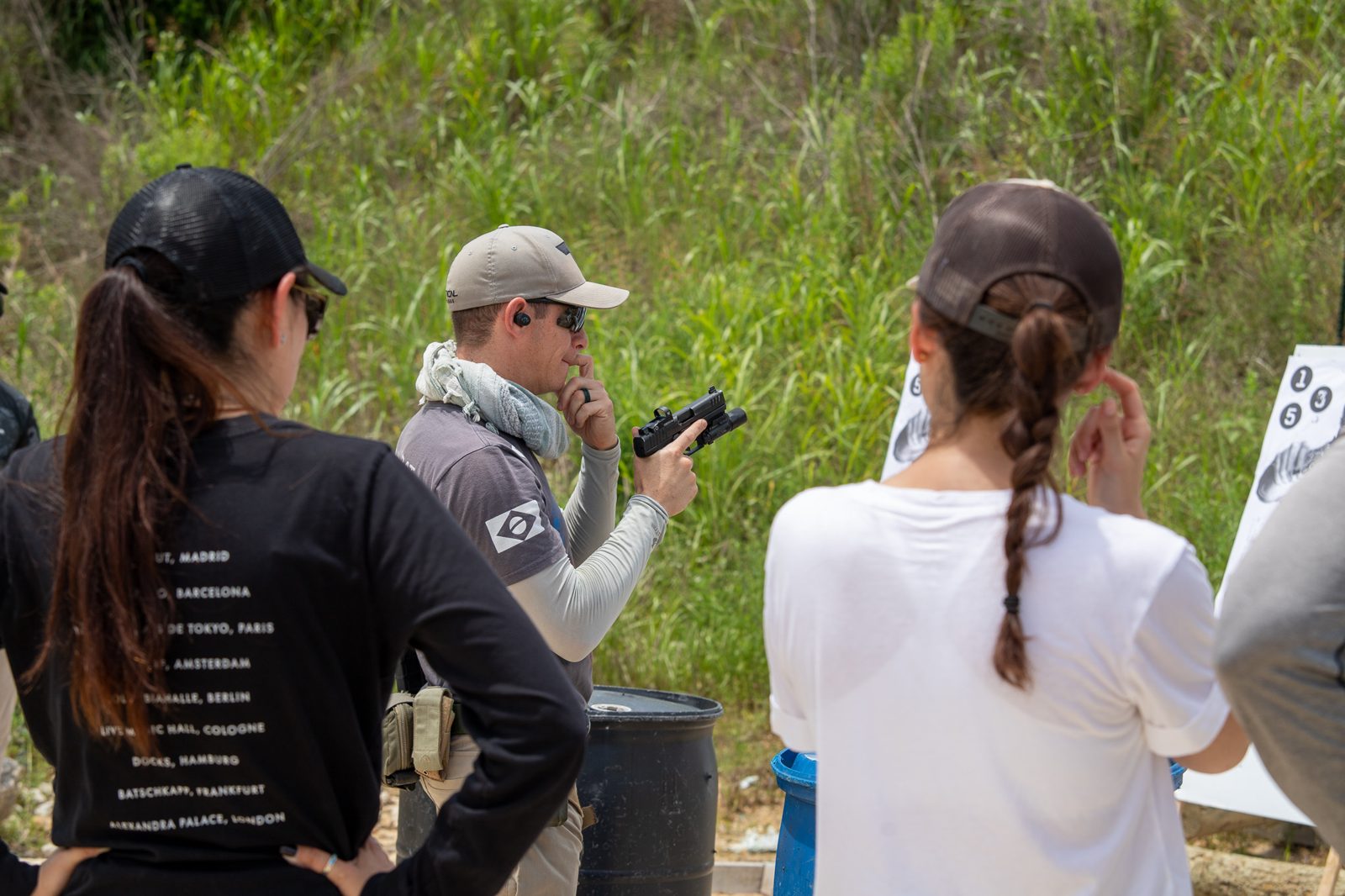
- A private outdoor tactical experience (the one we run)
- A boat day on Lake Austin with a programmed component, not just a party
- A ranch experience (sporting clays, ATV, fly fishing) — works for 6-12 person groups
- A barbecue tour with a private chef component
- A live music venue buyout (good if you have a strong music-loving culture)
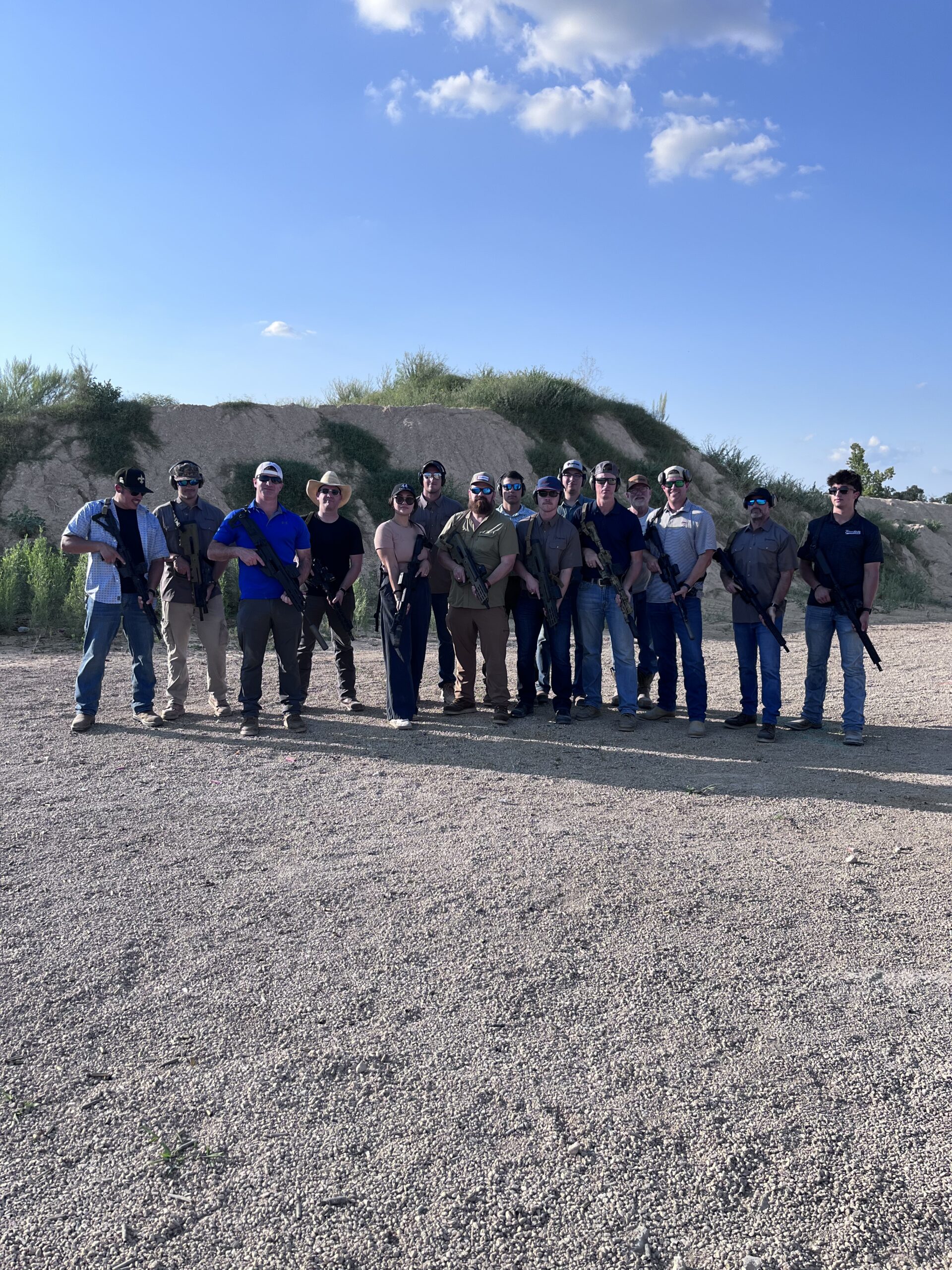
In our experience the tactical experience does what the others can’t: it forces real-time decisions under mild pressure, in a context most of the team has never been in, with everyone genuinely starting from zero. That’s why Samsung, YPO chapters, and Jackson Walker have used us — when the goal is reset/trust/integration, the leveling effect of “no one is the expert here” is exactly what you need.
If your team’s goal is purely reward / celebration, music + food works. If the goal involves any team dynamic outcome, you need an active anchor.
Step 3: Build the day around the anchor
Most offsites overpack. The team arrives tired from flights, the agenda is back-to-back, and by 3 PM half the room is checked out. Build backwards from the anchor:
For a half-day anchor (2-4 hours): – Light breakfast + soft-start arrival window (no hard 8 AM “team building activity 1”) – Anchor experience mid-morning into early afternoon – Catered lunch on-site (so the energy doesn’t dissipate during a restaurant transition) – Group debrief immediately after — this is where the offsite ROI actually lands – Optional evening: BBQ dinner, music, light drinks — let the team decompress together
For a full-day anchor: – Skip the morning “team building activity 1” — that’s already what the anchor is doing – Anchor experience occupies 9 AM to 4 PM with built-in breaks – Short debrief immediately after – Evening: structured dinner only if business outcomes need it, otherwise free time
For 2+ day offsites: – Day 1: anchor experience + dinner – Day 2: morning strategy session (the team is now bonded; meetings work better) – Day 2 afternoon: free time or optional second experience
The principle: fewer activities, more depth. A team that did one thing well on Tuesday remembers more than a team that did six things adequately.
Step 4: Logistics most planners learn the hard way
The non-glamorous parts that decide whether the day actually runs smoothly:
Transportation
For groups 8+, charter a bus or shuttle from the hotel. Even if every individual could Uber, you lose 45 minutes of group cohesion when the team scatters across rides. Programs we run at TFA include this for Ultimate Texan corporate tier, but many vendors don’t — ask explicitly.
Headcount and dietary
Confirm a final headcount 10 days before any event. The vendors who handle this well will tell you the same — late headcount changes are the #1 cause of catering snafus. For dietary, get gluten-free, vegan, kosher, halal, and severe allergy info at confirmation, not the day-of.
Time zones (when leaders fly in)
If the C-suite is flying in from East Coast, the 8 AM kickoff is 9 AM their body clock — fine. From West Coast it’s 6 AM their body clock — exhausting. Start times should reflect where the leaders are coming from, not the local time zone.
Weather contingency
For outdoor experiences in Austin: rain alone isn’t a cancellation event — credible operators provide canopies or covered alternatives. Severe weather (lightning, tornado warnings, flooding) is. Ask explicitly what triggers a cancellation and what the reschedule policy is. (Our policy: 48 hours’ notice to reschedule, full reschedule or refund only in severe weather.)
The “leaders need a quiet space” gap
Most corporate offsites accidentally leave the most senior person alone awkwardly during break periods. The C-suite often wants a quiet room to check email, take a call. If you don’t have it, the leader hovers and the team gets self-conscious. Solve this before the day starts.
Photography / video
Hire it. Five years from now nobody remembers what the team did unless there’s a clip. Most vendors offer this as an add-on. It’s $500-2,000 and pays for itself in internal communications value alone.
Step 5: Budget — what each tier actually gets you
Real numbers for Austin corporate offsites, in 2026 dollars, per person:
| Tier | All-in cost / person | What that buys |
|---|---|---|
| Lean | Quote-based | Half-day anchor experience + lunch + group transport. Good for 8-15 person teams. |
| Standard | Quote-based | Full-day anchor + catered lunch + group transport + light debrief support. Most corporate offsites land here |
| Premium | Quote-based | Full-day anchor with VIP elements (helicopter, etc.) + multi-course catered meal + transportation. |
| Executive | $3,000-5,000+ | 1-2 day program with custom programming, leadership facilitation, premium experiences, hotel + ground logistics handled |
Hotels, flights, and evening dinners aren’t in those numbers — they’re typically handled separately. Budget for an additional $400-800/person for hotel + ground for out-of-town teams.
Step 6: Measure if it actually worked
Most offsites are measured by “everyone said they had a good time” — which means almost nothing. The metrics that actually matter:
- Two-week follow-up survey: “What’s one thing you’ll do differently because of the offsite?” — qualitative answers tell you whether the outcome actually landed.
- Behavior change: Did the cross-functional friction the offsite was supposed to address decrease in the next 90 days?
- NPS-style score: “How likely are you to recommend a similar event for another team?” — captures peer-validation intent.
- Talent retention: Did the people the offsite was supposed to re-engage stay?
If the offsite was just for reward/recognition, “everyone said they had a good time” is fine. For everything else, define the metric before booking.
How TFA fits into corporate offsites
We’re not a full-service offsite planner. We’re the anchor experience inside a planner’s broader program. Here’s where we tend to be the right call:
- Sales kickoffs where the team needs to start the year together doing something memorable
- Executive offsites where the C-suite wants to see how the team reacts under unfamiliar pressure
- Cross-functional integration days where two teams that don’t naturally work together need shared experience
- High-performer recognition where the goal is reward + something nobody can replicate at home
- YPO forums that meet for the day-program component
We’re probably not the right call for:
- All-hands quarterly meetings with a heavy presentation component (you want a venue, not an experience)
- Pure reward / celebration where business goals aren’t relevant (you want music + food)
- Teams that need extensive facilitated discussion (we don’t run formal facilitation; pair us with one who does)
For groups that fit the first category, we handle the experience end-to-end: instructors, gear, ammunition, range, catered lunch, optional transportation, optional professional video. Most planners ask about price-per-head, which lands at $400-2,999 depending on which package + add-ons.
See our team building experiences →
Common questions
How early should we book a corporate offsite in Austin?
For Q1 and Q3 budget cycles (when most companies plan): book 8-12 weeks out. For sales kickoffs in January: book by November. For executive offsites: 6-10 weeks is workable; the rate-limiting step is usually the C-suite calendar.
What size groups work for an offsite anchor experience?
We’ve run groups from 5 to 100+. Sweet spot is 12-40 — large enough to feel like a real team event, small enough that everyone gets meaningful individual time with the experience. Above 60, you’ll want to split into two sessions or use a venue with parallel programming.
Do you accept corporate clients with security clearance requirements?
Yes. We’ve hosted teams from defense, government contracting, and security-sensitive industries. We work with your security team’s requirements on photography restrictions, ID verification, and gear handling protocols.
What about non-firearm corporate offsites?
We run a tactical-fitness curriculum that works as a non-firearm offsite anchor: combat conditioning, self-defense basics, decision-making under pressure drills. Same outcome focus, different tools.
Can we customize the program for our specific company values or goals?
Yes — that’s most of what we do. The 90-minute version of “fire 70+ machine guns” works as a reward event. The 6-hour custom version we built for a Samsung leadership cohort looked completely different — more structured drills, more debrief, more leadership-pressure scenarios. Tell us the outcome and we’ll design backwards.
Who handles dietary, accessibility, or medical accommodations?
We do, when given enough lead time. Dietary at confirmation (10+ days out). Accessibility and medical: tell us at booking — we can accommodate most needs but a few require specific advance planning.
What’s your cancellation policy?
48 hours notice required to reschedule. We only issue full refunds (or full reschedule at the client’s choice) in severe weather where it’s unsafe to train — defined as lightning, tornado warnings, flooding, or hazardous road conditions.
Who’s used us for corporate events
Samsung, YPO chapters, and Jackson Walker have all run programs with us — we’re listed because they’ve explicitly authorized it. Many other corporate clients (defense contractors, financial services, professional services firms) have asked us to keep their participation private.
What those clients have in common: they were planning around an outcome, not an activity, and the tactical experience served the outcome.
Get the corporate offsite planning guide
Want the worksheet we send clients before a corporate program? It walks through outcome definition, anchor selection, agenda structure, and budget. Free download:
Get the free corporate offsite planning worksheet →
Lock in a date
If you’re planning a corporate offsite in the next 2-12 months and want to see if our experience fits as the anchor:
- Email: [email protected]
- Phone / text: (512) 815-9101
- Or submit a corporate event inquiry →
I personally read every corporate inquiry. Tell us the outcome you’re trying to drive — we’ll tell you whether we’re the right fit or recommend an operator who is.
— Ron, Tactical Fitness Austin Founder